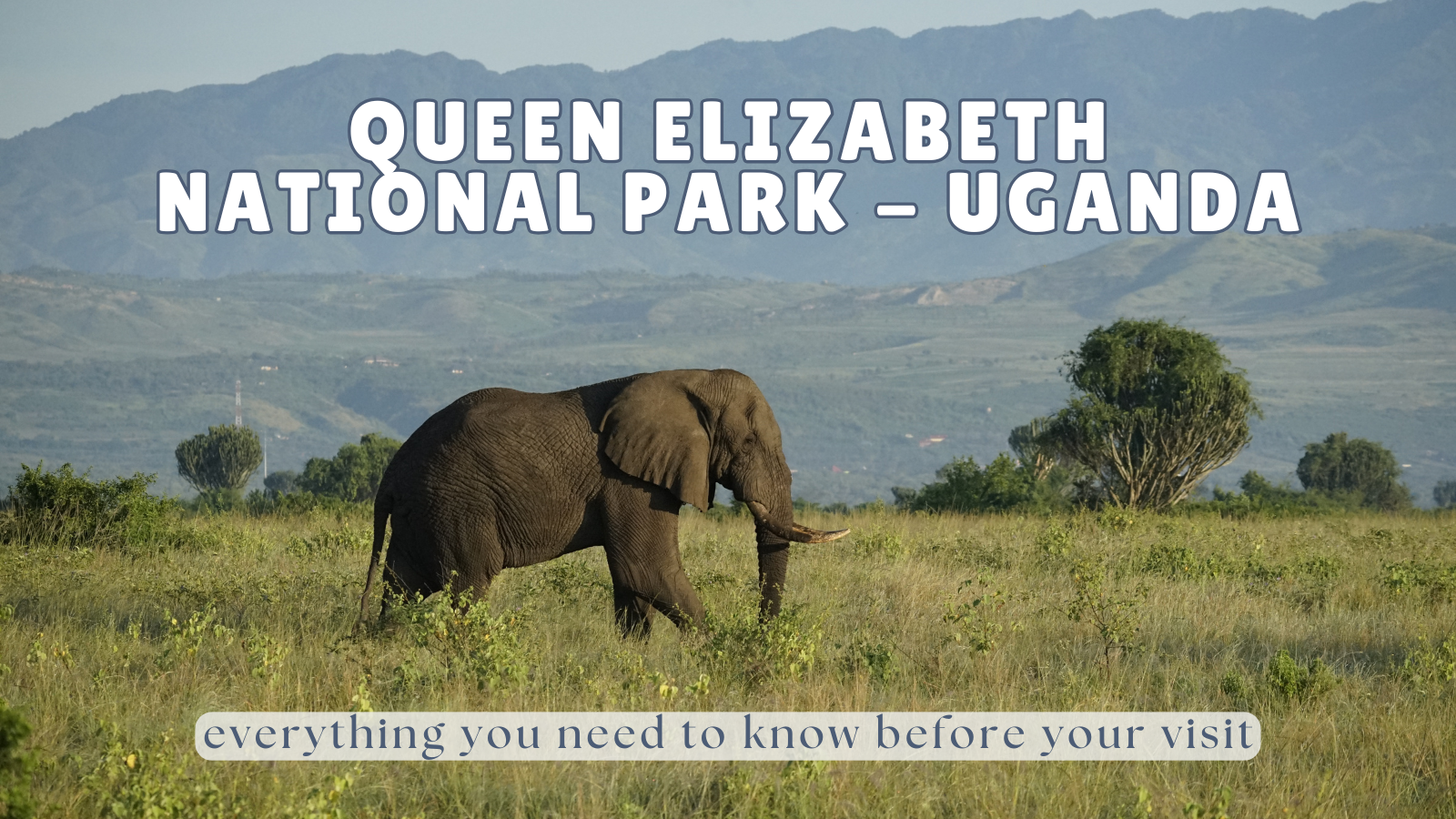
If you’re planning a safari in Uganda, I bet that Queen Elizabeth National Park (QENP) will almost certainly appear on your itinerary. It’s Uganda’s most visited national park, and for good reason. Between the classic game drives, the famous Kazinga Channel and the chance to spot tree climbing lions, it offers one of the most varied safari experiences in East Africa. Unlike many African parks that only focus on game drives, QENP offers a mix of environments – wetlands, open savannahs, the Kazinga Channel. It’s safari experience is quite different from anywhere else in the region.
We spent three days exploring Queen Elizabeth National Park as part of our Uganda road trip, self-driving through both the Kasenyi Plains and Ishasha sectors. Unfortunately, we didn’t managed to find the elusive tree-climbing lions but we still encountered an incredible amount of wildlife! Looking back, it couldn’t have been a better way to kick off 5 months of overlanding through Eastern and Southern Africa.
If you’re wondering whether Queen Elizabeth National Park deserves a place on your Uganda itinerary, I’ve compiled all the information you’ll need to know before you visit.
Disclaimer: Some links earn me a small commission – same price for you, slightly less tragic bank balance for me.
Queen Elizabeth National Park at a Glance
Location: Western Uganda
Famous for: Tree-climbing lions, Kazinga Channel, diverse landscapes
Big Five: 4/5 (no rhinos)
Self-drive: Yes (guide recommended)
Boat safari: Yes
Walking safari: Limited
Recommended stay: 2 – 3 days
Best time: June – September & December – February
Estimated Budget:
Entrance: $40/adult
Guide: $25/game drive
Self game drive: $10/entrance
Ugandan registered vehicle: 30 000 UGX ($8)
Why visit Queen Elizabeth National Park?
Queen Elizabeth National Park is probably one of Uganda’s best all round safari destination. The park covers almost 2000 km², making it one of Uganda’s largest protected areas. Within that space you’ll find open grasslands, acacia woodland (leopards love acacia trees), volcanic crater lakes, wetlands and the Kazinga Channel. The changing landscapes mean wildlife viewing is really varied and no two game drives feel exactly the same. It is also one of the few locations in the world where you might catch a glimpse of the famous tree climbing lions – however, don’t expect guaranteed sightings. After all, this is still the wild. During our visit, we came away empty handed but that’s all part of the safari experience.
After spending 2.5 weeks driving all around Western Uganda, we found Queen Elizabeth National Park to be one of the easiest parks to include in your Ugandan itinerary. It’s positioned between Kibale National Park and Bwindi Impenetrable National Park, making it a natural stop if you’re trying to do a chimpanzee trek, gorilla trek and a classic safari in one trip.
PLANNING YOUR VISIT
Understanding the layout of QENP
Queen Elizabeth National Park isn’t one continuous area where all the wildlife is found in one place. Instead, it’s made up of several distinct sectors, each offering a slightly different safari experience. Knowing the layout before you visit will help you decide where to stay and how many days you’ll need. I just didn’t realise spread out Queen Elizabeth National Park was until I started planning my trip there. On the map, it looks like it covers a large area but surely it can’t take that long to drive, right? Well, that was an incorrect assumption to have! Let’s break down the different sectors that make up Queen Elizabeth National Park. During our visit, we explored Kasenyi Plains, Mweya Peninsula and Ishasha sectors.
Kasenyi Plains – best for first safari
-
- Most popular game drive area
- Lions – Known as the Cat Territory
- Large herds of Uganda kob
- Good chance of predators
Ishasha Sector – best for travelling to/from south
-
- Tree-climbing lions
- Quieter
- Located in the Southern part of the NP
Mweya Peninsula – best for boat cruises
-
- Launch point for the Kazinga boat cruises
- Offers crater drives
- Visit the crater lakes of QENP
Kyambura Gorge
Famed for chimpanzee trekking, although you may be better off heading to Kibale National Park for the Chimpanzee Habituated Experience (CHEX).

Map courtesy of Uganda Wildlife Authority (UWA) – Queen Elizabeth National Park
How to Get to Queen Elizabeth National Park
There are a couple of different ways to getting to Queen Elizabeth National Park.
Self-drive (recommended)
We personally self drove with our safari rental car. I would recommend this option because it will allow you the freedom to self-drive throughout the park. You’ll also have the flexibility to decide how long/short you’d like to spend with the animals. As for driving into the national park, depending on which direction you came from, the road was mainly fine with the occasional potholes.
Driving times
Kampala
From Kampala, it is easily over 400km of driving so I can imagine it would take the majority of the day travelling to QENP from the capital. Whilst majority of the roads are in good condition, take into consideration traffic (especially exiting Kampala) and the odd pothole or road work.
Murchison
Another long drive from Murchison Falls National Park – well, from Masindi. It will take approximately 400km to get to QENP from Masindi. This journey would take somewhere between 8 – 9 hrs. Along the way, you will be passing Kibale National Park. My personal recommendation is if you’ve got the time, to stop in Kibale National Park for either the chimpanzee trek or chimpanzee habituation experience.
Kibale National Park / Fort Portal
As you’ll be coming from the north side of the national park, the entrance to aim for will be in the Kasenyi Sector. To the Kasenyi Sector – Main Gate of QENP, the journey is 110 km which takes ±2.5 – 3 hrs depending on road conditions.
Bwindi Impenetrable Forest National Park
From here, you’ll be taking the backroads and unsealed roads towards the Ishasha Sector. I would estimate it taking a full day of driving, especially if you don’t have much experience driving off road and are unfamiliar with driving in the back roads of Africa. My recommendation here would be to ask the locals the best route, check on online forums and start your journey early in the morning in order to be able to drive with as much daylight as possible.
Getting between Ishasha Sector and Kasenyi Plains Sector
The distance between the two sectors is only about 90 km, but since you’re technically within the national park, the speed limit is reduced to 40 km/h – making the drive take about 2.5hrs. I know it sounds like a long time but think of it as doing a game drive – keep your eyes peeled for any wildlife along the road. And honestly, take your time – the road is unsealed so after some rain, it may be challenging to drive.
Guided tour
There are plenty of tour and safari companies that pay a visit to Queen Elizabeth National Park as part of their itinerary. If you’re not a confident driver, prefer everything already planned and arranged for you – that’s completely fine! A guided tour is a good option as those tours incorporate the game drives into the itinerary already. All you would need to do is show up.
The main downside to joining a scheduled tour is that your timeline is already predetermined with very limited room for compromise. Another issue would be the package pricing is higher than a DIY trip. But of course, the difference in price boils down to whether you want to handle all the logistics and driving.
Public transport
Unfortunately, there are no public buses that travel directly into Queen Elizabeth National Park. You can take buses to nearby towns such as Kasese or Katunguru before arranging private transport to your accommodation or safari lodge. However, because distances inside the park are large, public transport isn’t practical if you’re planning to explore independently. Organising private transfers and transport is a pretty pricy option.

Where to Stay
We stayed in two different sectors of QENP – Ishasha Sector (attempting to see the tree climbing lions) and Kasenyi Sector.
In Ishasha, we stayed in one of their tent at Ishasha Pride Lodge. Breakfast was included and it was less than a 15 min drive to the Ishasha Sector entrance. Here we had a communal ablution block which was clean and electricity available in our tent.
In Kasenyi Plains, we also stayed in a tent at Engiri Game Lodge and Campsite. Similarly to Ishasha Pride Lodge, it was located about 10 mins from the Kasenyi Plains entrance with a communal ablution block (although a little rundown). Onsite, they had a great restaurant and common area. For me the highlight of this campsite was actually the resident elephant, John, who would come to visit after breakfast. The campsite is unfenced so you never know what sort of wildlife will come strolling in for a visit.
For both these accommodations – the atmosphere is relaxed, the restaurants are good and both their locations make for a convenient base to explore their respective sectors of Queen Elizabeth National Park.
How many days do you need?
For most travellers, I’d suggest two full days in the Kasenyi Plains Sector (including Mweya Peninsula) is the ideal amount of time. It will give you a chance to do a guided game drive and enjoy a boat safari at the very least. Sure, you could do this in one day but you’ll probably feel rushed after the long drives.
If you opt to try to spot the tree climbing lions, then I would stretch it to 3 full days in the national park.
Best Time to Visit
Queen Elizabeth National Park can be visited throughout the year – but conditions vary considerably. If you have more than one opportunity to visit, you’ll see the landscape and animal behaviour change throughout. The dry seasons (June to September and December to February) generally offer the best wildlife viewing as animals gather around permanent water sources and the roads are easier to navigate. When you visit during rainy seasons, the landscape transforms into lush greenery – excellent for birdwatching. However, as there’s more water sources throughout the park, wildilfe can be more dispersed and roads muddy.
We visited early to mid May, and conditions were completely fine – we were very lucky during our time in Uganda not to have much rain whilst doing our safari drives – that could not be said about the evening before of our chimpanzee habituation experience!
Park Fees
We visited QENP in May 2025. I’ve included the prices we paid at that time. In addition, I’ve done some research and included the updated prices at the time of writing (August 2026). At the time of writing, park entrance fees and activity prices are charged separately. Keep in mind that prices change regularly, it’s worth checking the Uganda Wildlife Authority (UWA) website before your trip.
|
Activity |
Cost (foreigner) |
|
Park entrance |
$40 |
|
Ranger guide |
$25 |
|
Kazinga Channel boat cruise |
$30 |

Know Before You Go
Here are a couple of things worth noting before your visit to Queen Elizabeth National Park.
Entrance tickets + Timings
Entrance tickets are valid for 24 hrs from the time of purchase. It’s worth knowing to plan your game drives. So you could use your Ishasha Entrance in the morning for your game drive in the evening at the Kasenyi Plains Entrance.
Most of the entrances are open with the first entrance at 0600hrs and closes by 1900hrs. If you’re headed to Kasenyi Entrance – just keep in mind that this is one of the more busier entrances so aim to get there early to be one of the first ones in the queue… if not you’d be waiting for a while.
4×4 Vehicles
If you plan to use your own vehicle for a game drive, keep in mind that there is an extra charge for all vehicles but especially for foreign-registered 4×4 cars which is at USD $150 per vehicle per 24hrs. Ugandan registered cars are 30 000 UGX. Remember to keep your receipt in your car at all times to show proof of payment.
4×4 cars aren’t actually required but I would suggest to getting them. Depending on your season, it may be easier to navigate the unsealed roads and muddy roads so you won’t get stuck. As you can’t drive off the path, it’s advantageous to have a high clearance vehicle!
Wildlife Sightings
Unfortunately, I’ve seen a lot of people online be upset about not seeing a certain animal on their safari game drive. Just keep in mind, these are still wild animals are sightings are never guaranteed… even for the famous tree climbing lions.
Also, keep in mind that the best wildlife viewing would be early morning and late afternoon as it’s cooler for the animals (and you!) to have a wander. As you’re in a national park – never get out of your vehicle.
Fuel
Highly recommend filling up before entering the park. Especially in busier areas like Kasenyi Plains/Mweya Peninsual – there are petrol stations in nearby towns. However, if you plan to do a lot of driving, it may be advisable to fill up a jerry can if your vehicle is diesel.
Carry cash
It’s always worth having some cash (either in USD or UGX) on you for purchases or tipping. In some places, cards might not be accepted so be sure to ask before filling up your car.

Wildlife in Queen Elizabeth National Park
Although the lions steal the headlines, Queen Elizabeth’s real strength is the sheer diversity of wildlife. During our three days in the park, we saw elephants, buffalo, hippos, Ugandan kob, warthogs, waterbuck, baboons and countless bird species. The only major disappointment? No cats. But let’s be real for a second – this is after all WILDlife so there should be no expectations to see any specific animal. Just unlucky.
The famous tree-climbing lions
While many people make it sound like the tree climbing lions are guaranteed – they aren’t. Seeing them depends on timing, luck and sometimes simply being in the right place at the right time. But if you do get the chance to see them, it is really interesting! The Ishasha Sector Lions can be found climbing and resting in fig trees – often spending the hottest part of the day resting on large branches.
We dedicated time to searching for them but unfortunately weren’t successful. While that was disappointing, it also reminded us that no safari comes with any guarantee and that’s part of what makes every wildlife encounter so rewarding when you actually encounter it!
Birdlife
There is more to a safari than spotting the Big 5. In my humble opinion, being a birder will enhance your experience. Queen Elizabeth National Park is exceptional for it! Uganda is home to just under 1100 bird species. Of this – over 600 bird species have been recorded here!!! Making this the most bird-diverse protected area in Uganda… and one of the richest birding destinations in East Africa.
Even if you’re not a dedicated birdwatcher, the variety becomes especially obvious during the Kazinga Channel boat cruise, where fish eagles, kingfishers, pelicans, cormorants and countless other waterbirds line the shoreline.
Big 4 out of 5
Unfortunately, in the 1980’s, the native Ugandan population of northern white rhinos and eastern black rhinos was wiped out. It was a result of a combination of civil war, political instability and more notably – poaching… So in QENP, you cannot find any rhino species – yet. Although – Save the Rhino and the UWA are working tirelessly to reintroduce rhinos back into the national parks – as of this year, they have reintroduced southern white rhinos to Kidepo Valley National Park.
Of the other Big 5 – the elephant, water buffalo, leopard and lion – you should be able to spot them in QENP. We unfortunately didn’t spot the lion or leopard during our safari drives.
Best Things to Do
Go on a self drive safari
One of my favourite things about travelling through Africa is that many national parks can be explored independently!! QENP is no exception. Rather than following a convoy of safari vehicles, you can set your own pace, stop whenever something catches your eye and spend as long as you like watching the wildlife. The road network around the Kasenyi Plains is generally in good condition and easy to navigate. We loved having the flexibility to head out early in the morning, linger at busy waterholes and take detours whenever we spotted something interesting.
One of our favourite routines was heading out on a guided game drive first, then later retracing the same route by ourselves. It gave us the chance to revisit areas we enjoyed, spend more time photographing wildlife and simply soak up the experience without feeling rushed. If you’re travelling with your own vehicle, a self-drive safari is one of the best ways to experience Queen Elizabeth National Park.
Take a Kazinga Channel boat cruise
I had never done a boat safari until doing the Kazinga Channel boat cruise. It’s a perfect opportunity to spot large concentrations of hippos, crocodiles and birds at close range… If that is your aim, then it’s definitely worth doing! Personally, we found it enjoyable rather than spectacular. The birdlife was fantastic. There isn’t necessarily more animal species that you’d spot but it’s always interesting to see how different groups of animals rotate with each other at the riverbanks!
If you’re particularly interested in bird photography or want a different perspective from game drives, you’ll probably enjoy it!

Self-Drive vs Guided Safari
Unlike many safari destinations where you’re restricted to guided vehicles, QENP is one of Uganda’s easiest national parks to self-drive. That said, I wouldn’t skip hiring a ranger guide altogether.
We did a combination of both. We hired a guide for one of our game drives and then later drove the same routes by ourselves. It ended up being the perfect balance. The guide knew exactly where recent sightings had been reported and pointed out animals we would have driven straight past. Afterwards, we could take our time revisiting those areas, stop whenever we wanted and enjoy the park at our own pace. For us, this combination both gave us the best of both worlds.
If you’ve never been on safari before, it’s easy to underestimate just how well wildlife blends into its surroundings. A leopard sleeping in an acacia tree or a lion resting in long grass can be almost impossible to spot unless someone knows what they’re looking for.
If you’re travelling independently, I’d recommend budgeting for at least one guided game drive at the start of your visit. You’ll learn how to spot wildlife, get your bearings around the park and probably see far more than you would on your own. After that, you can decide whether to continue with a guide or head back out by yourself.
Our Experience
Before arriving at Queen Elizabeth National Park, we had one goal in mind: seeing the famous tree climbing lions. Unfortunately, they had other plans and were nowhere to be found! Oops. Despite spending time exploring the Ishasha Sector, we came away without seeing lions. At first, it felt a little disappointing. After all, they’re the animals that feature on almost every brochure and Instagram post about Queen Elizabeth.
But looking back, I don’t think that’s what I’ll remember most about this park. Instead, I remember the huge herds of Ugandan kob scattered across the plains, elephants wandering beside the road, hundreds of hippos packed into the Kazinga Channel and constantly feeling like there was something new around every corner. Every sector felt slightly different, which kept the game drives interesting over the three days we spent there. In many ways, Queen Elizabeth NP ended up being the perfect introduction to our five months of overlanding through Eastern and Southern Africa. It reminded us very quickly that safari isn’t about ticking animals off a checklist. Some days you’ll find exactly what you’re looking for. Other days you won’t. That’s also what makes those special sightings so memorable when they finally happen.

Is Queen Elizabeth National Park Worth Visiting?
Absolutely. If you’re hoping to combine a classic African safari with the rest of Uganda’s incredible wildlife experiences, I think Queen Elizabeth National Park is one of the easiest parks to include in your itinerary.
Queen Elizabeth stands out because of its variety. In the space of a couple of days, you can drive across open savannah, cruise past hundreds of hippos on the Kazinga Channel, explore volcanic crater lakes and search for elephants, buffalo, lions and leopards… all before heading off to track chimpanzees in Kibale National Park or gorillas in Bwindi Impenetrable Forest National Park.
If you’re only visiting Uganda for the primates, I’d still make time for Queen Elizabeth, especially if you have yet to go on a safari… It adds a completely different side to the country and breaks up the rainforest trekking with a more traditional safari experience. Would we visit again? Without a doubt. Not because we missed the tree climbing lions (although that gives us a good excuse to go back)… but because I think there’s still plenty of the park left to explore. And so many more birds to see!
TL;DR? Check out these FAQs
Is Queen Elizabeth National Park worth visiting?
Yes. It’s Uganda’s most diverse safari destination and combines game drives, boat safaris and varied landscapes in one park.
Can you self-drive in Queen Elizabeth National Park?
Yes. We self drove throughout the park. Although we highly recommend hiring a ranger guide for your game drives to improve your wildlife sightings. Also to learn how to drive through a national park.
Are the tree climbing lions guaranteed?
No. They are after all – WILDlife. We searched for them during our visit and didn’t see them. Wildlife sightings are never guaranteed.
How many days do you need in Queen Elizabeth National Park?
We recommend spending at least two full days, although three days allows you to explore both Kasenyi and Ishasha at a much more relaxed pace.
Is the Kazinga Channel boat cruise worth it?
If you enjoy birds, hippos and bird watching – yes. For us, it was a pleasant addition to the trip rather than the standout experience.

Continue Planning Your African Adventure
If Uganda is just one stop on your Africa itinerary, these guides will help you plan the rest of your journey. From buying a 4×4 for a months-long overland trip to budgeting for Namibia, Mozambique and Madagascar, they’re all based on our own experiences travelling independently across the continent.
Chimpanzee Habituation Experience (CHEX), Uganda – Spend an entire day with a troop of wild chimpanzees in Kibale National Park and discover what makes this one of Uganda’s most rewarding wildlife experiences.
Southern Africa 4×4 Buyback Guide – Everything you need to know about buying, registering and selling a vehicle for an overland adventure through Southern Africa. Perfect if you’re planning a long-term road trip.
Namibia Road Trip Itinerary (2½ Weeks) – Our complete self-drive itinerary covering the country’s iconic highlights, from Etosha National Park to Sossusvlei and the Skeleton Coast.
Namibia Budget Breakdown – Find out exactly how much we spent travelling independently around Namibia, including fuel, campsites, food and activities.
Mozambique Overland Itinerary (16 Days) – A practical guide to planning an unforgettable road trip along Mozambique’s coastline, including beaches, diving and logistics.
Mozambique Travel Budget – A detailed breakdown of what our Mozambique road trip cost, helping you budget for accommodation, transport, food and activities.
Madagascar Budget Breakdown – Planning a trip to one of Africa’s most unique destinations? This guide covers our real travel costs to help you estimate your budget.

Leave a Reply