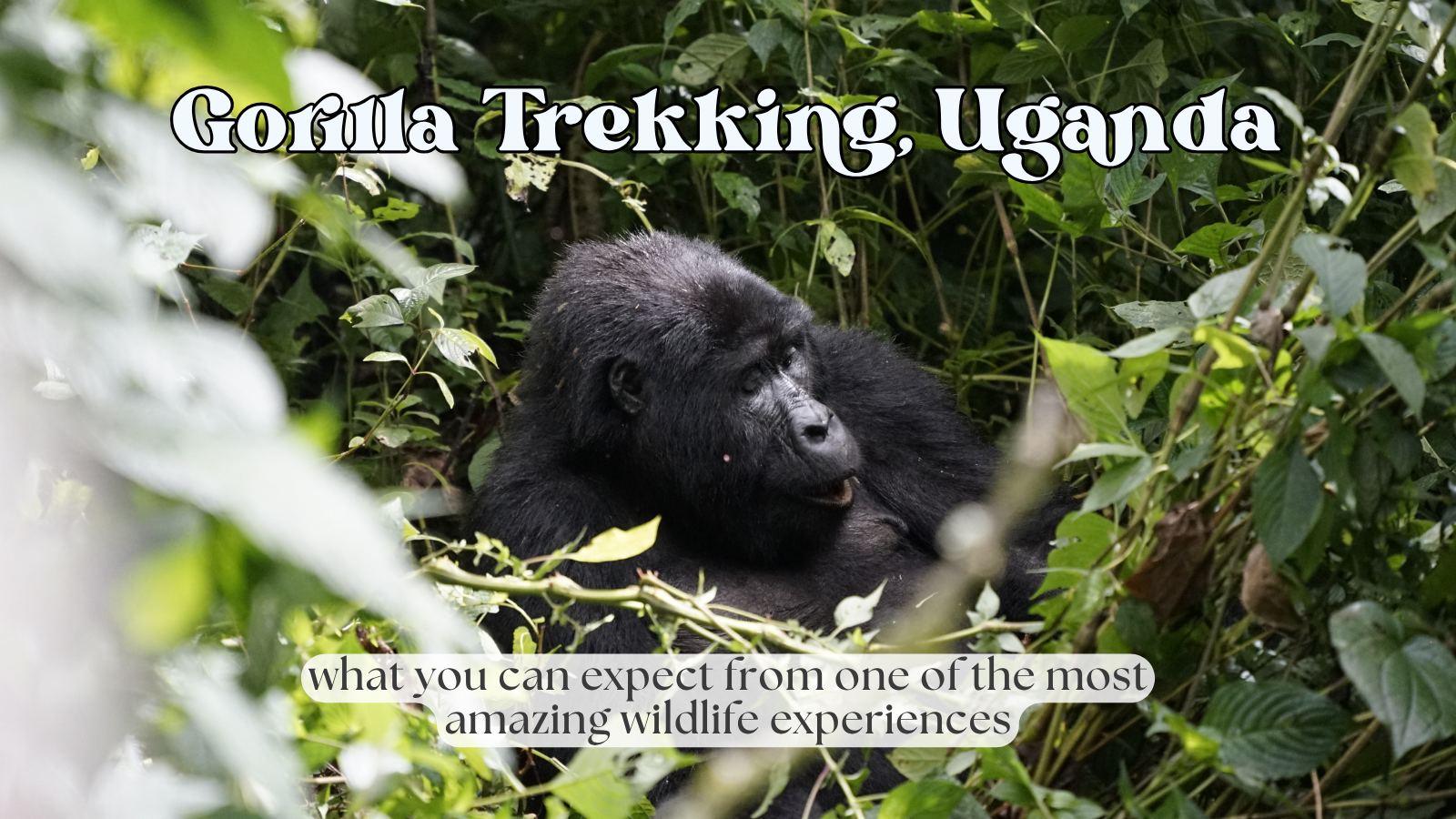
Gorilla trekking in Uganda is such a unique experience that I think any animal lover needs to do at least once in their life. An estimated 40 – 50 000 visitors head to Bwindi Impenetrable Forest National Park annually – information is abundant online. However, when planning my trip, I realised I wanted to know about the experience itself… what happens when you arrive? how long are you really going to be hiking for? And what does it feel like to finally stand a few metres away from a family of mountain gorillas?
Unlike a traditional safari game drive – gorilla trekking involves heading into the forest on foot to find a habituated gorilla family. There’s no fixed route or guarantee finish time. Your day is loosely structured, following no precise schedule. There will be a reasonable chance that you’ll be spending most of the day hiking uphill, downhill, through the mud, bushwhacking your way through the dense forest… You might even wonder to yourself why did I sign up for this?? Especially considering the heat and humidity.
I found the trek to be a lot more physically demanding compared to my Chimpanzee Habituation Experience in Kibale National Park. The experience itself was completely different. Here’s how our day of gorilla trekking unfolded in Bwindi Impenetrable National Park. Hopefully, this experience will help prepare you for yours.
Disclaimer: Some links earn me a small commission – same price for you, slightly less tragic bank balance for me.

How we went gorilla trekking in Uganda
We had to change our plans around gorilla trekking. Originally, we had planned to go to the Democratic Republic of Congo to see the Eastern lowland gorillas through a tour agency. However, leading up to our trip, Bukavu was captured by a rebel group and its borders were closed to foreigners, so we were unable to go ahead with those plans..
We hadn’t originally planned to go gorilla trekking in Uganda. It was offered as an alternative when we couldn’t cancel our existing reservation despite the ongoing conflict. Our gorilla trekking wasn’t organised independently and a travel agency organised everything for us: including permits, accommodation, food, transportation.
Gorilla Trekking Experience in Bwindi Impenetrable Forest
Early start and briefing
It’s no surprise but gorilla trekking starts early. Our alarm went off at 0500hrs. I’d recommend having your trekking clothes and day pack ready the night before rather than scrambling at the wee hours trying to find everything. Our accommodation had prepared a small breakfast for us at 0530hrs. We left shortly after at around 0600hrs. Fortunately, we were staying just 30 mins from the main entrance.
Once arriving at the briefing point, we met some other visitors headed out gorilla trekking that morning, along with the park rangers. There was a little time to get organised before the briefing began. During the briefing, we were given instructions and rules we needed to follow: how to behave around the gorillas and what to expect during the trek. A cultural performance followed the briefing – celebrating local traditions, welcoming visitors to the reserve. It was a lovely addition to help get everyone energized before heading into the forest.

Rules during the trek
Rules are designed to protect both visitors and the gorillas. Mountain gorillas are still wild animals, even though the families visited by tourists have been habituated to human presence.
We had to maintain the required distance from gorillas, avoid any sudden movements and keep our voices low. Your ranger will explain how to behave if a gorilla approaches or if the situation changes – so listen to them carefully. We were also told to avoid eye contact with the silverback gorilla (mature male gorilla) as it may challenge dominance.
Mountain gorillas share about 96% of their DNA with us so they are susceptible to human respiratory illness – which is why precautions are taken seriously. You’re expected to follow face mask requirements and disclose any illness that could put the gorillas at risk. If you’re feeling unwell, speak to your tour operator or the park staff rather than turning up and hoping for the best.
Being assigned to a Gorilla Family
Visitors are allocated a different family. Trekking groups are kept deliberately small. Each habituated family has a limit on the number of visitors it can receive per day so permits are restricted.
If you’re worried about your fitness, don’t rule out gorilla trekking in Uganda. You don’t need to be an elite hiker. However, you should be comfortable walking long distances on uneven ground. Since I was still recovering from my ACL injury, I asked my tour guide to request an “easier family” to trek to.
Of course, this doesn’t guarantee an easy walk or that the gorillas will be waiting just around the corner. Remember, these are still wild animals so it’s like finding a needle in a haystack. Their movements depend on where they are feeding, nesting and socialising. Trackers use their knowledge of the gorillas to locate them. They will communicate with the guides, guiding the group where to go.

Trekking through the forest
Once you leave the briefing point, the hike itself becomes part of the adventure. You may not necessarily be following a well-trodden footpath. The forest is dense. The terrain is uneven, with exposed roots, slopes and muddy sections to navigate. There are places where the vegetation is so dense that it’s difficult to see far ahead.
We obviously relied on our guides and trackers to lead the way. I found it fascinating hearing their explanations of where the gorillas might be, clues they were looking for and the behaviours of the gorillas. It’s not just a walk through the forest but rather you’re following people who know the forest and understand the gorillas’ movements.
It’s hard to say for everyone but generally, the walk is physically demanding. After all, you’re IN the forest rather than taking an easy route to the gorillas. I reckon that’s the exciting part because there’s a sense of anticipation as you move through the vegetation knowing the gorilla family may be somewhere near by.
COME FACE TO FACE WITH WILD CHIMPANZEES IN UGANDA. Trekking through the rainforest in search of chimpanzees is a very different kind of wildlife experience. Find out what to expect and how to plan your Kibale chimpanzee trekking adventure.
How long does it take to find the gorillas?
The trackers will be ahead of you – communicating with the guides as they work to locate the family. They were familiar with the gorilla’s movements and had a general idea where they may be. But the gorillas are still free to move around the forest so you never know. That’s part of the unpredictability of wildlife encounters. Definitely go with a flexible attitude. Mountain gorillas move through the forest to feed, rest and socialise, so the location of a family can change from day to day. Your ranger and trackers use that information to work out the best route to take.
For us, it took around an hour and a half to find the family. I wouldn’t plan your day around the assumption that yours would be similar – some reach their gorilla families sooner while others spend longer on the trail. Don’t assume a shorter trek will necessarily be an easier one. A family that’s relatively close to the trailhead could still involve a steep climb, while a longer walk might follow more manageable terrain. The distance and difficulty depend on where the gorillas are, the landscape and the route your guides choose.
Finally seeing the gorillas
Our guide went ahead while we caught our breath. Not too long after, we saw her signaling to us to come closer and stay quiet. There was movement in the buses and then we spotted something emerging from the vegetation: a playful baby gorilla climbing up some stalks… looking rather clumsy. All of us knelt and watched the little one. Such a special moment after spending the morning working through the forest!
Suddenly, a massive silverback gorilla appeared from behind us and made his way towards the youngster, keeping an eye on him. Silverbacks can weigh well over 150 kg… although I’d seen plenty of wildlife documentaries, I still wasn’t prepared for just how large a mountain gorilla looks in person. My heart stopped. A silverback was sitting right in front of me, unbothered by our presence. Seeing one in the wild is VERY different from seeing one from the comfort of your sofa. I remember being struck by his sheer size.
As exciting as it all is, it’s important to remember that you’re a visitor to their space. Follow your guide’s instructions on where to stand and how to behave. Let the gorillas carry on without trying to attract their attention.

Spending an hour with the gorilla family
Once you’ve located the gorillas, you only get an hour with them. It sounds like plenty of time but honestly, it flew by.
During that hour, you’ll observe so many different behaviours – feeding, resting, grooming one another or interacting with other members of the family. Young gorillas might play while the adults sit nearby. I know it’s easy to become fixated on the silverback. However, I’d encourage you to pay attention to the infants and juveniles as well – they are such characters.
Reminder for everyone
Photography is permitted but flash photography isn’t. The flash may distract or cause distress to the animals. It’s worth checking your camera settings beforehand so you’re not fumbling trying to change settings when the gorillas appear. If you’re unsure where you should stand or how to get a better view without disturbing the animals or blocking other visitors, ask your guide.
It’s tempting to keep taking photographs. You want to remember every single detail. It’s not every day you have a mountain gorilla sitting a few meters in front of you. But try to put down your camera every now and then… There’s so much to take in beyond the photographs. You might appreciate having a couple of minutes to just watch what’s happening around you. Don’t forget to use your other senses to remember the experience.
Manage your expectations
It’s worth managing your expectations. When my husband did his first gorilla trek in Rwanda, his group spent their viewing time watching the family sit out in the open with relatively little movement. This experience was quite different – the silverback kept moving away from the troop. As a result, we spent a lot of our time trying to spot the gorillas through the dense vegetation.
My main disappointment was that everyone was so focused on seeing the silverback that the guides largely ignored the juveniles and other members of the troop. It’s a shame because there’s so much more to observe than the dominant male. Regardless, they are wild animals and no two encounters are guaranteed to be the same. That’s part of the experience, even if it’s not always what you imagined.

The hike back out of the forest
Unfortunately, all good things must come to an end… Once your hour is up, your ranger will let you know it’s time to leave the family. You’ll say goodbye to the family and make your way back out of the forest. Depending on where you’ve found the gorillas, this can be a relatively straightforward walk or another substantial hike. You’ll still have uneven ground, slippery sections and plenty of uphill or downhill walking to contend with.
Once back at the trailhead, there was time to catch our breath, drink some water and reflect on the experience. We had a debrief with our guides and received a certificate recognising the gorilla trek, which is a nice little memento to take home. And then back at the park headquarters, we meet your guide and head back to our accommodation for a well-earned shower, something to eat and a bit of rest. We ended up spending the remainder of the day decompressing and walking around the property birdwatching… going through some photos and our experiences together. After such an intense morning, it was a lovely way to wind down.
How difficult is gorilla trekking in Uganda?
Gorilla trekking itself isn’t necessarily technically difficult. At least, not in the same way that mountaineering or scrambling can be. Regardless, it IS physically demanding. In general, your trek will include a combination of steep hills, muddy ground, thick vegetation and unpredictable distances. Overall, the experience depends on where your assigned gorilla family is located in the national park. Treks can range from a few hours to half a day. Others, like ours was an hour and a half before we found the family. There’s no way to guarantee exactly how long your particular trek will take.
If you’re reasonably active and comfortable walking for several hours on uneven ground, you’ll be better prepared than someone who rarely walks beyond flat pavements. That said, you don’t need to train for a triathlon. Building up your walking endurance, practising on hills and getting used to walking in your hiking footwear will all help plenty. If you do have concerns about the physical demands, discuss them with your guide beforehand. You can ask your tour operator about the trekking sector, available support and whether a porter would be useful.
Porters: they are available in most of the trekking areas. Their job is to carry your daypack and offer assistance on difficult sections.
SLOTH SMARTS: Hiring a porter can make a real difference particularly on steep/slippery sections. The porters are also from the surrounding communities so you’ll be supporting them directly.

What happens if you don’t find the gorillas?
The good news is that gorilla trekking in Uganda has a 95% + success rate. Experienced trackers work to locate the habituated families before visitors are led into the forest, using their knowledge of the gorilla families. As with everything – the animals are still wild and sightings can never be guaranteed absolutely.
The permit gives you the opportunity to trek and spend up to an hour with a gorilla family if you find them. It isn’t a promise of a particular photograph or a guaranteed close-up view. If you’re booking through a tour operator, ask them to explain the arrangements for your specific trek, including what happens in the unlikely event that the gorillas cannot be located. Don’t assume that you’ll automatically receive a refund or another trek, as the applicable arrangements depend on the relevant park rules.
Is gorilla trekking worth it?
Gorilla trekking isn’t cheap. Permits in Uganda are USD$800 per person (foreign, non resident). Between the permit, accommodation, transport and the physical effort involved, it’s something you’ll probably want to plan carefully rather than squeeze it in because you think you have a couple of days to spare. The experience is quite different from seeing wildlife on a conventional safari. You’re on foot through the forest, following people who know the animals and their habitat until you get the chance to spend time observing a family of mountain gorillas in the wild.
I think it’s worth approaching gorilla trekking with realistic expectations. You might be lucky enough to find the family without too much hiking… or you could spend several hours working your way through steep, muddy terrain before reaching them. The gorillas might be sitting in a relatively open area or you may have to look carefully through the vegetation to spot them. There’s no way to know exactly what your encounter will look like beforehand. Despite my initial disappointment of how little attention was paid to the younger gorillas, I’m so glad we went. Seeing a baby monkeying around and having a silverback so close was surreal. Either way, the only aim isn’t just to tick off a photograph of a silverback and move on to the next activity… I’d recommend you spend some time observing the animals in their natural habitats.

Gorilla trekking rules you need to know
The rules around gorilla trekking are there to protect both visitors and the gorillas. Mountain gorillas can be vulnerable to human illnesses. Even a seemingly harmless interaction can carry risks. Your guides will explain the rules during the briefing but these are the main points to keep in mind.
- Don’t trek if you’re unwell.
If you have a cough, cold or another potentially infectious illness – tell your operator or the park staff before the trek. - Keep your distance.
Follow the current minimum-distance rule given by your ranger. - Don’t touch or feed the gorillas.
Even if one approaches you, let the rangers guide your response. - Don’t eat or drink near the gorillas.
Wait until your guide says it’s appropriate to have refreshments. - Don’t use flash photography.
Prepare your camera settings in advance so you can take photographs without it. - Keep your voice low and movements calm.
Avoid shouting, sudden movements or trying to attract an animal’s attention. - Follow your guide’s instructions.
If the gorillas move or the situation changes, the rangers will tell you what to do. - The minimum age for gorilla trekking in Uganda is 15 years.
Rules and procedures can change, so check the current Uganda Wildlife Authority guidance before your visit.
Enjoy your gorilla trek. It is truly a once in a lifetime experience.
Planning a trip? Here’s where to start:
Accommodation: Find somewhere to stay with Booking.com. Whether you’re after a centrally located hotel, a cosy guesthouse or somewhere with a mountain view, compare your options before booking.
Looking for budget accommodation? My favourite backpacker accommodation website is HostelWorld with some fantastic options all around the world.
Tours & Experiences: Fancy borrowing my plans? Browse GetYourGuide and Viator for day trips, guided tours and experiences worth adding to your itinerary.
Transport: Travelling within Europe? Compare routes and tickets with Omio. Globetrotting around Asia – your best friend will be Trip.com
Travelling in South East Asia? I would recommend having a look at Trip.com for tour options and 12Go.Asia for transportation tickets (ferries, boats, buses).
Car Rental: Want a little more freedom to explore? Compare rental options with DiscoverCars and check the pick-up location, insurance terms and mileage allowance before committing.
eSIM & Internet: Stay connected without hunting for a local SIM card at the airport. Airalo eSIM has plenty of options or Saily eSIM is another solid option.
Travel Insurance: I always recommend looking into travel insurance before a trip. Compare policies that cover your activities, medical expenses, cancellations and any other risks relevant to your plans.

Leave a Reply