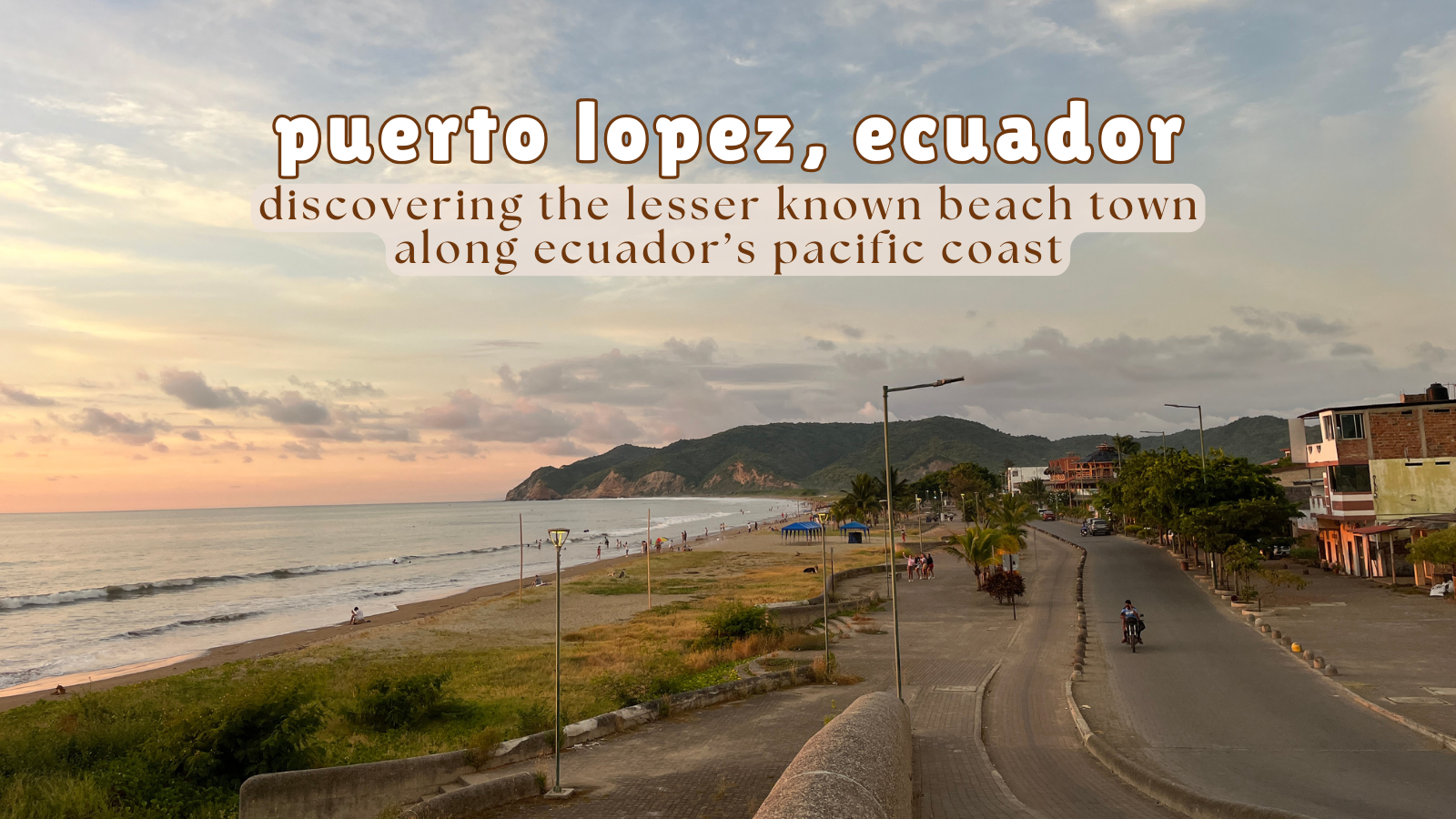
Puerto López may actually be a bit of a hidden gem. Depending on who you speak to… A small fishing town on Ecuador’s Pacific coast, surrounded by Machalilla National Park. But for travellers who actually make it here, it can be a nice addition to their Ecuadorian itinerary if they didn’t make it to Galapagos. Some people might describe it as a party town, which on the surface, I completely agree with. But you need to look deeper. Puerto López is the main gateway to Isla de la Plata and Isla Salango inside Machalilla National Park. Some of the best wildlife experiences you can have on mainland Ecuador. During the right season, humpback whales breach offshore while frigatebirds circle above the fishing boats. All you need to do is take a short boat trip to meet some amazing wildlife.
This guide covers everything: what to do, the islands in Machalilla National Park, whale watching season, safety, transport, where to stay and whether Puerto López is actually worth it. Let’s dive in!
Disclaimer: Some links earn me a small commission – same price for you, slightly less tragic bank balance for me.
Where is Puerto López?

Puerto López is located on Ecuador’s central Pacific coast in Manabí Province. Fishing communities are the backbone of this stretch of coastline. The landscapes consist of dry forests and protected marine ecosystems. The town itself is small and centred around the beach, the harbour and a handful of streets with restaurants, tour agencies and guesthouses. It can feel surprisingly lively on weekends, especially along the promenade. During the weekend and public holidays, the promenade turns into a bit of a party destination.
Is Puerto López worth visiting in 2026?
If you’re visiting the Ecuadorian coast, it stands out to other towns mainly for its wildlife access. The main reasons why it would be worth visiting are that it combines:
-
- Whale watching (seasonal but world-class)
- Isla de la Plata (“Poor man’s Galápagos”)
- Isla Salango (snorkelling and diving alternative)
- Access to Machalilla National Park beaches
It can be a weekend party town but it is not built for luxury travel. If you’re heading south to Montanita for surfing, it’s not a bad place for a pit stop. Fishing boats still dominate daily life here. Pelicans circle above the harbour and by sunset the malecón fills with seafood smoke and music from the beachfront bars. It feels reminiscent of parts of Southeast Asia before large-scale tourism arrived.
Best things to do in Puerto López
Whale watching in Puerto López
This is the main reason Puerto López is famous. Every year, humpback whales migrate from Antarctica to the warm waters off Ecuador to mate and give birth. Puerto López becomes one of the best places on the continent to see them! During peak season, sightings are extremely common and boats regularly encounter whales breaching, tail slapping and swimming close to the coast.
Best time for whale watching:
Generally, June to September is considered the whale watching season here, peaking in July – August. Many tours combine whale watching with Isla de la Plata, making it a full-day marine experience.

Isla de la Plata
Isla de la Plata is the most popular day trip from Puerto López. Inside Machalilla National Park, this island is famous for its seabird colonies and marine wildlife. It is where you can see blue-footed boobies, magnificent frigate birds, turtles and sometimes manta rays, depending on conditions!
Read our full guide to visiting Isla de la Plata, including tour prices, seasickness tips, wildlife spotting and what to expect on the boat crossing.
It is often nicknamed the “Poor man’s Galápagos” because it offers similar wildlife without the cost or logistics of the islands. The downside is the ocean crossing, it can be rough for some and seasickness is very common! But regardless, for most travellers, it’s still the highlight of visiting Puerto Lopez.
Scuba Diving
There aren’t too many scuba diving outfits in Puerto Lopez. To dive at Isla de la Plata, they need a minimum of 4 divers. For Isla Salango, a mininum of 2 divers. I was quoted USD$150 for a two tank dive to Isla Salango. And USD$160 for a two tank dive to Isla de la Plata. I think diving in Isla de la Plata would be pretty amazing in June – September as it is also manta ray season there… One of my friends went diving here and they said they had seen so much wildlife mid-year!
Puerto López beach and town
The town itself is simple. The beachfront promenade is the center of everything. Your restaurants, bars, tour operators… it’s all very central. It’s not the nicest beach in Ecuador but the overall atmosphere is quite nice. It truly is a small fisherman village mixed alongside a touristy village.

Isla Salango
Isla Salango is the lesser known counterpart to Isla de la Plata. Located just off the small village of Salango, south of Puerto López, it sits within the same coastal ecosystem but is completely different in scale and atmosphere. It’s not really known as the wildlife island but you can find a colony of fur seals there which is quite a lovely sight. Most tours come here for the beaches or for snorkelling/diving.
Read our complete Isla Salango guide covering snorkelling, beaches and what to expect from the tour.
Things to know before visiting Puerto López
Cash is still king here
Personally, we found that having cash is quite useful in certain parts of Ecuador. This is one of those places. Transportation (tuktuk, buses, taxis etc), restaurants along the beach side, small kiosk purchases are all examples of where it’s cash only. The currency used in Ecuador is USD. My advice is to bring smaller notes rather than just big notes.
There are some ATMs available in town. The one we used and know works with international cards is this bank, right on the beach promenade. If you’re planning on withdrawing, do so early in the day!
Puerto Lopez turns into a party town during the weekends
This wasn’t something we expected when we arrived to Puerto Lopez. It’s quite the party town along the main promenade. Heaps of bars, clubs and restaurants blasting their own music. We came to find out it’s where a lot of locals come for the weekend to let loose. If you sleep anywhere north of the bridge, you’re actually in the quiet part of town.

Whale watching season
Whale watching season starts from June to September off the coast of Puerto Lopez. There are plenty of tours going out every day during this season. Unfortunately, we were there in April and didn’t see any whales! I’ve been told it’s actually one of the best places for whale spotting in all of Ecuador.
The sun can be brutal
Maybe I’m more of a snow bird now but I can find the heat and sun in Puerto Lopez to be brutal! It’s a challenge because a lot of sunscreen isn’t reef safe but you also don’t want to get burnt by the intense heat. My best advice, like in so many places, is to use a UV shirt and hat… try and avoid the sun at the highest UV index of the day but that can be a challenge!
Boat crossings can be rough
Planning on heading out towards Isla de la Plata? Just keep in mind that the hour boat crossing can be pretty brutal! It wasn’t all that bad on the day we went, but some other passengers were getting quite seasick. Bring your own sea sickness tablets with you if this is something that you might be susceptible to. They didn’t seem to have any onboard the boats.
Staying connected in Puerto López
We always assume that smaller towns might mean connectivity is bad. Not always the case. In the town of Puerto Lopez, WIFI was generally widely available – except for the beach bars/restaurants. If connectivity is important to you, I recommend downloading an eSIM – I recommend either Airalo or Saily. Keep in mind, while travelling down the coast between towns, connectivity may drop out but you will have it in the towns.
How to leave Puerto Lopez
We had a bit of a nightmare trying to get out. We had reserved the 0900hrs bus out of Puerto Lopez with Coop Aray. However, when we got to the bus station, they claimed that the bus wasn’t running. We managed to get a local bus to the city of Manta and then on a bus to Quito from there. Here’s the kicker: it was the Coop Aray bus! Just keep that in mind if you’re doing the journey from Puerto Lopez – Quito during the day. Most of the buses actually run overnight, departing at 2100hrs and arriving in Quito early in the morning.

How many days do you need in Puerto López?
You need a minimum of 2 full days if you want to visit Isla de la Plata and Isla Salango. We stayed for 3 nights and thought that was about right. It’s located quite a distance from the major cities so it’ll take you a full day to get in if you’re not already coming from along the coast. It took us about 10 hours to get here from Cuenca with a transfer in Guayaquil.
The trip to Isla Salango is a half day tour, you could easily fit visiting Los Frailes here as well. However, we were trying to hide from the heat and decided to skip Los Frailes, unfortunately. If you’re planning on diving or travelling along the coast slowly, you could opt to spend longer.
Example Itinerary
Day 1: Arrive in Puerto Lopez. Spend time walking along the promenade and have dinner.
Day 2: Do a tour to Isla Salango.
Optional: afterwards, head to Los Frailes beach.
Day 3: Visit Isla de la Plata. Spend the day spotting dolphins, blue-footed boobies, magnificent frigatebirds and snorkelling.
Day 4: If taking the overnight bus, spend the day at Los Frailes.

When is the best time to visit Puerto López?
The general consensus is to visit between June to September. During this period, it’s overall the best time to go whale watching, drier conditions and peak wildlife activity. Between December to April, it is generally more humid and the landscapes are greener.
We visited in early April and we did see the magnificent frigatebirds performing their mating dance.
Is Puerto López, Ecuador safe?
Personally, we thought it was fine. Puerto Lopez is still visited by many looking for a small, easygoing town with the beaches and national park right there. However, in more recent times, Ecuador’s coastal regions have seen increased safety concerns. This doesn’t mean that it’s dangerous but rather you should be more aware of your surroundings.
General safety advice:
-
- Stay in the populated areas at night. Avoid isolated areas.
- There are tuk-tuks readily available to take you short distances. Use them especially at night.
- While it’s generally safe, don’t carry your valuables openly.
- If you’re going to the beach, try to carry as few valuables as possible. If you’re with someone, take turns swimming.

Getting to Puerto López
There are a couple of options of getting to Puerto Lopez. If you’re short on time, it might be an idea to take a flight to Manta and take the 3 hr bus to Puerto Lopez from there.
From Guayaquil
At the Guayaquil terminal, you can get the Cooperativa Jipajipa bus that goes directly from Guayaquil to Puerto Lopez. It’s the most direct option. Still, it will take some time, approximately 5 – 6 hours. It will cost USD$6 per person. The buses are basic and even though they say there’s a toilet onboard, don’t be fooled, there isn’t.
From Quito
Quito South Terminal is where you’ll take the buses to the coast. There is a company Cooperativa Aray that claims that they take you all the way to Puerto Lopez. However, when we tried to take the reserve journey, the bus did not come to Puerto Lopez at all and you can take it from Manta.
Where to stay in Puerto López
Puerto Lopez itself is a small town. You can pretty much walk everywhere and find budget to mid range accommodation near the beach or beachfront. Most of the accommodation in the town are small hotels or local guesthouses. There are two main parts to the beaches. Before the bridge, where you’ll be near all the restaurants and the area is louder with the sound of music. Or after the bridge, where everything is calmer and the beachside isn’t filled with restaurants or bars.
Accommodation in Puerto López can book out surprisingly quickly during whale season (July – August), especially beachfront guesthouses.
What food is Puerto López known for?
Seafood! It’s fresh, simple and everywhere. It’s one of the best places along the coast as you can see them bring in the daily catches fresh from the boats. My personal favourite dish from the region is encocado – essentially a coconut stew with a protein of your choice, served with rice. It’s absolutely delicious and goes fantastically with any local seafood.
Other typical dishes from the region are: ceviche, encebollado, grilled fished, garlic prawns…

People also ask these questions about Puerto Lopez
Can you see blue-footed boobies in Puerto López?
Yes! But only on nearby Isla de la Plata inside Machalilla National Park. The island is famous for its blue-footed booby colonies and is often called the “Poor Man’s Galápagos” because of its wildlife experiences.
Do you need to book tours in advance?
Usually no, but July and August can be busier.
Can you swim in Puerto López?
Yes, but Los Frailes is better for swimming.
Is Puerto López better than Montañita?
Different. Montañita is a surf and nightlife town. Puerto López is wildlife and nature. Although, on the weekends it can be quite busy with the city folks!

Let’s wrap it up
Puerto López still feels connected to the ocean in a way many coastal towns no longer do. Fishing boats leave before sunrise, magnificent frigatebirds circle overhead and by afternoon the waterfront fills with travellers returning from Isla de la Plata sunburnt, salty and exhausted.
As of now, Puerto López does not have a curated beachfront or luxury infrastructure. But it does have so much wildlife off the coast, it’s truly amazing… Whales offshore in migration season, an island full of birdlife. If you are travelling to Ecuador for nature, wildlife and coastal experiences that still feel real, Puerto López is a perfect stopover.


Leave a Reply