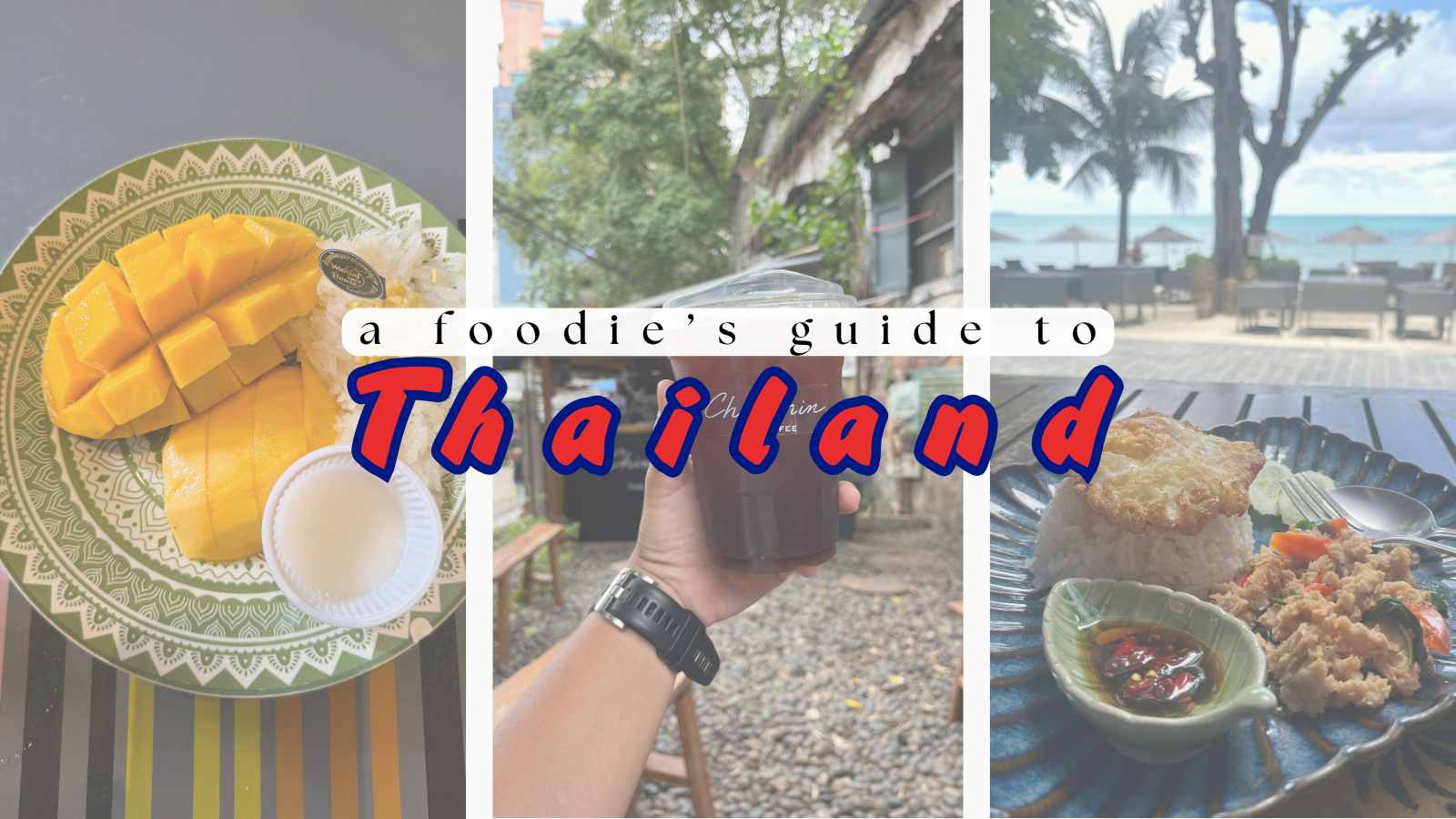
Every time I go to Thailand, I end up eating far more than I intended to. Thai food is THE main reason I love travelling around the country. You can eat incredibly well in Thailand on a budget – whether you’re sitting at a tiny local restaurant, picking something up from a night market or eating somewhere a little more polished. The food always delivers.
While I tend to order some of the classics, the cuisine is extremely varied. The country is so vast, it has four distinct regional cuisines. What you eat changes considerably depending on where you are. Northern Thai food isn’t the same as what you’ll find in Bangkok… Southern Thai cuisine can be an entirely different experience again. There are also plenty of dishes that never seem to make it onto Thai restaurant menus overseas. I don’t eat pork, so I’ve also included plenty of dishes where you can find pork free options. If you’re planning a trip to Thailand and want to know what to actually order when you get there, these are the Thai dishes I’d put on your list.
Disclaimer: Some links earn me a small commission – same price for you, slightly less tragic bank balance for me.

Types of Thai Cuisine
Before getting stuck into the individual dishes, it’s worth knowing that Thai food isn’t just Pad Thai and green curry. Thailand is generally divided into four main regional food traditions: Northern, Northeastern (Isaan), Central and Southern Thai cuisine. Each has its own ingredients, flavours and influences, so don’t expect the same food everywhere you go.
Northern Thai food is more earthy and influenced by its Burmese neighbours. The dishes tend to lean heavily on aromatics, use less coconut milk and make more use of fermented ingredients.
Isaan Thai food comes from Northeastern Thailand and draws influence from its Laotian neighbours. The flavour profile tends to be spicy, sour and umami rich, with coconut milk barely featuring.
Central Thai food is the cuisine most associated with Thai food, originating around Bangkok and the central plains. Coconut milk and jasmine rice feature heavily, with Chinese and Portuguese influences also playing a role.
Southern Thai food is famously fiery. It shares plenty of flavours and influences with Malay and Indonesian cooking. It features fermented shrimp paste, bird’s eye chilli, turmeric and lemongrass.
Thai food to try while travelling around Thailand
Pad Thai ผัดไทย
The dish probably most associated with Thailand. The rice noodles are thin, stir fried with simple but tasty ingredients – egg, tofu, bean sprouts, your choice of protein before being finished off with tamarind, fish sauce, sugar, lime, chilli and crushed peanuts… a very popular dish you can learn at a Thai cooking class. Whilst the ingredients sound so straightforward, it’s a difficult one to perfect. You’ll find it everywhere in Thailand.

Tom Yum Goong ต้มยำกุ้ง
I feel like pad thai is the common introductory dish to Thai cuisine but tom yum truly shows off the delicate balance of Thai flavours. It is a famous hot and sour soup made with lemongrass, galangal (asian ginger), keffir lime leaves, chilli and lime. The best known variation is made with prawns or seafood but you can swap that out for a protein of your choice. It’s fiery, spicy, sour, salty, aromatic – all perfectly balanced.
Massaman Curry
This curry dish tends to be the most popular amongst visitors because it’s generally richer and less spicy than the other curries. Whilst it is a Thai dish, it is a blend of other cultures – namely Malay, Indian and South East Asian influences. As it was introduced to Thailand by muslim spice traders, the dish is rarely made with pork so an easy choice if you don’t eat pork. It is cooked with aromatic spices (including local aromatics like lemongrass and shrimp paste) meat, potatoes and coconut milk.

Pad Kra Pao ผัดกะเพรา
Also spelt: Pad Krapow / Pad Gaprao. This dish is called holy basil sitr fried. You can find either a pork or chicken variation. The meat is sitr fied with holy basil, chilli, gralic, seasoning – served with rice and topped with a fried egg. To me, this is the definition of something so simple but so filling, delicious and homey. This personally is just the typical homecooking I crave when I’m back in Europe.
TRUST ME ON THIS: Don’t skip the egg!
Curry dishes
Gaeng Keow Wan แกงเขียวหวาน (Thai Green Curry)
Another classic dish you’ll find at Thai restaurants abroad. Whilst it looks creamy and mild, it is anything but. The green colour comes from using green chilis as well as fresh herbs – all blended into a paste before it is cooked off. It’s commonly served with chicken and rice – but you’ll find plenty of other protein choices. This is definitely a dish you shouldn’t order thai spicy for.

Kanom Jeen ขนมจีน
These are thin, fermented rice noodles which are usually served with a curry or spicy sauce poured over the top, alongside fresh vegetables and herbs. What makes it particularly fun is that there isn’t just one version. The curry changes depending on where you are in Thailand, with Southern, Northern and Central variations all having their own flavours and ingredients.
SLOTH SMARTS: Don’t be shy with the vegetables and herbs. They are there to balance out the curry and make each mouthful a little different.
Noodle dishes

Khao Soi ข้าวซอย
If you’re visiting Northern Thailand, be sure to put this on your foodie list. This northern Thai dish consists of egg noodles in a rich curry and coconut based broth with the most common protein being either chicken or beef. Served on top are crispy fried noodles. The common accompaniments are pickled mustard greens, lime, shallots, chili which allows you to adjust the flavour according to your own liking. This is definitely a dish that shows how different regional foods can be from one another.
Pad See Ew ผัดซีอิ๊ว
Think of this one as Pad Thai’s lesser known cousin. Pad see ew is made with wide, chewy rice noodles stir-fried with dark soy sauce, veggies, egg and your choice of protein. Unlike Pad Thai, it doesn’t use tamarind, so the flavour is much more savoury rather than slightly sweet than tangy. It’s simple, filling and the type of everyday food you could eat on repeat.
Boat Noodles ก๋วยเตี๋ยวเรือ
Traditionally served from boats along Bangkok’s canals, these days you’ll find them in tiny noodle shops and restaurants. However still with the small bowls of rich and intensely flavoured broth. The noodles are topped with meat, meatballs, herbs and other little additions, depending on where you eat. The portions are deliberately small, which is actually part of the fun. Order a few bowls and try different combinations rather than committing yourself to one enormous bowl of noodles.

Rad na / Lad na ราดหน้า
This is one of those Thai dishes that doesn’t necessarily look particularly exciting when it arrives, but somehow works incredibly well. Wide rice noodles are stir-fried before being covered in a thick, savoury gravy made with stock, soy sauce and vegetables. You’ll usually find it with chicken, beef, prawns or seafood.
It’s softer and more comforting than something like Pad Thai, with the gravy soaking into the noodles rather than everything being stir-fried together. Think Thai noodles meets comfort food.
SLOTH SMARTS: Add a little chilli vinegar or dried chilli flakes. The acidity cuts through the rich gravy.
Street food classics
Gai Yang ไก่ย่าง
This is essentially Thai grilled chicken. Sounds simple, right? Well, yes and no. The chicken is marinated with a mixture of herbs, seasonings before it’s grilled over charcoal fire – giving a smoky taste, crispy skin and juicy meat. It’s street food at it’s finest. I know that street food may be out of your comfort zone for many but find a stall with a whole row of chicken sticks grilling over the charcoal and ask for the ones freshly made. You can either accompany this with sticky rice or papaya salad (som tam) or have it on it’s own for a snack. Can’t go wrong either way.

Khai Jiao ไข่เจียว (Thai Omelette)
Thai omelette sounds like one of those dishes that shouldn’t need an entire section in a Thai food guide. And yet, Khai Jiao deserves one. This isn’t quite the delicate French omelette you might be imagining. Thai omelettes are typically beaten until light and fluffy before being fried in plenty of hot oil, creating those wonderfully crispy, almost lacy edges while the middle stays soft. They can be served simply with rice or made with different fillings and toppings. It’s cheap, filling and ridiculously satisfying, particularly when you want something that isn’t covered in chilli.
Som Tam ส้มตำ (papaya salad)
Som Tam (ส้มตำ) is Thai green papaya salad. You’ll often see shredded unripen papaya being pounded with a mortar and pestle with chilli, garlic, lime, tomatoes, peanuts and seasonings. The result is unlike any other salad you’ve had before. It’s crunchy, spicy, tangy, salty and a bit sweet. Depending on your heat level and which region you’re trying this – it can potentially be really pack a spicy punch…

Roti
This is a quintessential backpacker experience. It’s actually why the backpacker route in South East Asia is called Banana Pancake Trail. Basically, you know the place/town you’re visiting has already been changed to accommodate Western travellers. You cannot travel around Thailand without encountering this iconic street food. It is a thin, crispy, buttery flatbread commonly sold from little food carts or market stalls. You can find a variety of flavour combinations. Banana pancake drizzles with condensed milk is probably the most familiar version to tourists. My personal favourite is the nutella + banana combination.
Thai Desserts

Mango Sticky Rice ข้าวเหนียวมะม่วง
Hands down, this is probably Thailand’s most famous dessert. Warm sticky rice served with ripe mango and sweet coconut cream. The combination of warm, slightly salty coconut sticky rice with sweet mango is delicious, especially after a spicy meal.
Pa tong ko
Thai-style doughnuts. They’re crispy on the outside and soft and slightly chewy on the inside. On it’s own, it has a fairly mild flavour. It’s often served with pandan custard for dipping, which in my opinion, balances out the oils from frying. I think they are usually served as a breakfast snack in Thailand but I usually find them at the night market in Chinatown. I’d happily grab a bag of these to munch on while wandering around.
Kanom Krok ขนมครก (or Khanom Krok)
These little coconut rice pancakes are my favourite Thai snacks. They’re made from a mixture of rice flour, coconut milk and sugar, then cooked in a special cast iron pan with little round moulds. The outside gets slightly crispy while the inside stays soft, creamy and coconutty. I personally love the ones without any toppings but that’ll depend on your preference. They’re usually sold in little batches, so they’re perfect for grabbing while wandering around a market. Be careful as they are hotter than the sun’s surface! So wait for a little while before popping one in your month so you won’t burn yourself.

Khanom krok bai toey
These little green cakes get their colour from pandan, which gives them a lovely fragrant smell and a slightly sweet flavour. They’re made with rice flour, coconut milk, sugar and pandan. You’ll see this mixutre being poured into small round moulds until the outside is lightly cooked and the inside stays soft and chewy. The coconut milk gives them a lovely richness. If you’re a fan of pandan and coconut desserts, these are worth picking up when you spot them at a Thai market.
PERSONAL SUGGESTION: Head to Little P BKK where you can try both khanom krok bai toey and thong muan sod! They have a couple of shops around but my favourite is their outlet located near Talat Noi.
Thong muan sod
Thong muan sod are soft, rolled Thai coconut pancakes made from a batter of rice flour, coconut milk, sugar and eggs. They’re cooked on a hot griddle and rolled up while they’re still warm. I’ve had coconut as fillings and those are delicious. The pancake itself is slightly chewy. Look out for stalls making them fresh, as they’re particularly good while they’re still warm.
Thai Coconut Ice Cream
Thai coconut ice cream is one of those simple little treats that somehow tastes even better when you’re eating it in the heat of Thailand. It’s made with coconut milk rather than the heavy cream you’d find in many Western-style ice creams, so it’s lighter, creamy and soooo refreshing. You’ll often find it served in a coconut shell or cup with toppings such as roasted peanuts, sweet corn, sticky rice or coconut pieces. Make it your own!
Eating Thai food without pork
If you don’t eat pork, Thailand is still a very easy country to eat your way around. There are plenty of dishes that naturally use chicken, beef, seafood or vegetables… You don’t need to only survive on pad thai and green curry during your trip. The important thing is not to assume something is pork-free just because you can’t see pork on the plate. Pork can turn up in minced meat dishes, meatballs, sausages, noodle broths and sauces – if you’re unsure, ask! Here are a few useful words can make ordering considerably easier:
- หมู (moo) = pork
- ไก่ (gai) = chicken
- เนื้อ (nuea) = beef
- กุ้ง (goong) = prawns/shrimp
- ปลา (pla) = fish
- ผัก (phak) = vegetables
How to find good local thai food?
One of the easiest ways to find somewhere worth eating in Thailand is to pay attention to where locals are actually going. Sounds obvious, but a restaurant full of tourists isn’t necessarily a bad restaurant and an empty local-looking restaurant isn’t automatically brilliant either. Sometimes the best approach is much simpler: find somewhere busy, look at what everyone else is eating and order something that looks good.
Shell Shuan Shim

If you see a little green bowl logo outside a Thai restaurant, it may be worth stopping to investigate.
Thailand’s equivalent of the Michelin Guide. Shell Shuan Shim means Shell invites you to try in Thai. Similar to the Michelin Guide, you can identify restaurants with this logo by a green bowl hanging outside the storefront. It started in 1961 as part of a marketing campaign but has now grown into where locals will find the best dishes at an affordable price. Unlike the Michelin guide, Shell Shuan Shim doesn’t focus on fine dining options but rather traditionally honors street vendors, local family run shophouses and eateries across Thailand making it accessible to everyone.
I wouldn’t use it as the only reason to choose somewhere, but if you’re wandering around and see the logo – CHECK OUT THAT MENU!
Do a Cooking class
I did a cooking class a couple of years ago in Chiang Mai and it was truly a beautiful experience. I loved learning how to make the typical Thai dishes – exactly how you’re suppose to! A very useful skill to have if you’re feeling a little peckish for Thai food!. Different cooking schools will allow you to pick a couple of different dishes if you fancy learning something else.
What Thai food should you try first?
LOOKING TO EXPLORE THE CUISINES OF THE WORLD? Check out my other food guides for more inspiration.
If you’re completely overwhelmed by the menu, I’d start with the classics: pad kra pao, tom yum goong, green curry and pad thai… And my following suggestions will depend where in Thailand you’re travelling to. If you’re headed north towards Chiang Mai – khao soi for sure. Heading eastern to Isaan region, gai yang with sticky rice. For the Southern regions, try the regional curries. Have a sweet tooth after your meal? Definitely try mango sticky rice, obviously. My personal favourite is kanom krok though.
Don’t forget, if you don’t eat pork, don’t let that put you off exploring Thai food! There’s so many options that don’t include pork. Some of the best dishes I’ve eaten in Thailand have involved absolutely no pork whatsoever.
Join a local food tour!
Obviously, the best thing to do if you’re overwhelmed with what to try is to join a food tour! There are plenty all around the country and I’ve added a couple highly rated tours below. They will allow you to learn a bit about Thai food culture and try different dishes!
Don’t just order what you know
Thai food is one of those cuisines where the more you travel around the country, the more you realise you haven’t even scratched the surface. I’ve eaten and cooked plenty of Thai food outside Thailand… but there’s something different about sitting down to a bowl of noodles in a tiny local restaurant, picking up grilled chicken from a market or ordering a dish you’ve never heard of and having absolutely no idea what is about to arrive. It feels very Anthony Bourdain-coded (and I love that).
That’s probably my biggest piece of advice when eating in Thailand: don’t just stick to the food you already know. Yes, order the Pad Thai. Eat the mango sticky rice. Have the green curry if that’s what you fancy. But then point at something you’ve never heard of, check what’s in it, accept that you might have absolutely no idea what you’ve just ordered and give it a go. You might hate it. You might discover something you’ll order for the rest of your trip. And if the latter happens, you’ve got another Thai food problem to deal with: figuring out how to fit it in alongside everything else you wanted to eat.

Planning a trip? Here’s where to start:
Accommodation: Find somewhere to stay with Booking.com. Whether you’re after a centrally located hotel, a cosy guesthouse or somewhere with a mountain view, compare your options before booking.
Looking for budget accommodation? My favourite backpacker accommodation website is HostelWorld with some fantastic options all around the world.
Tours & Experiences: Fancy borrowing my plans? Browse GetYourGuide and Viator for day trips, guided tours and experiences worth adding to your itinerary.
Transport: Globetrotting around Asia – your best friend will be Trip.com
Travelling in South East Asia? I would recommend having a look at Trip.com for tour options and 12Go.Asia for transportation tickets (ferries, boats, buses).
Car Rental: Want a little more freedom to explore? Compare rental options with DiscoverCars and check the pick-up location, insurance terms and mileage allowance before committing.
eSIM & Internet: Stay connected without hunting for a local SIM card at the airport. Airalo eSIM has plenty of options or Saily eSIM is another solid option.
Travel Insurance: I always recommend looking into travel insurance before a trip. Compare policies that cover your activities, medical expenses, cancellations and any other risks relevant to your plans.

Leave a Reply