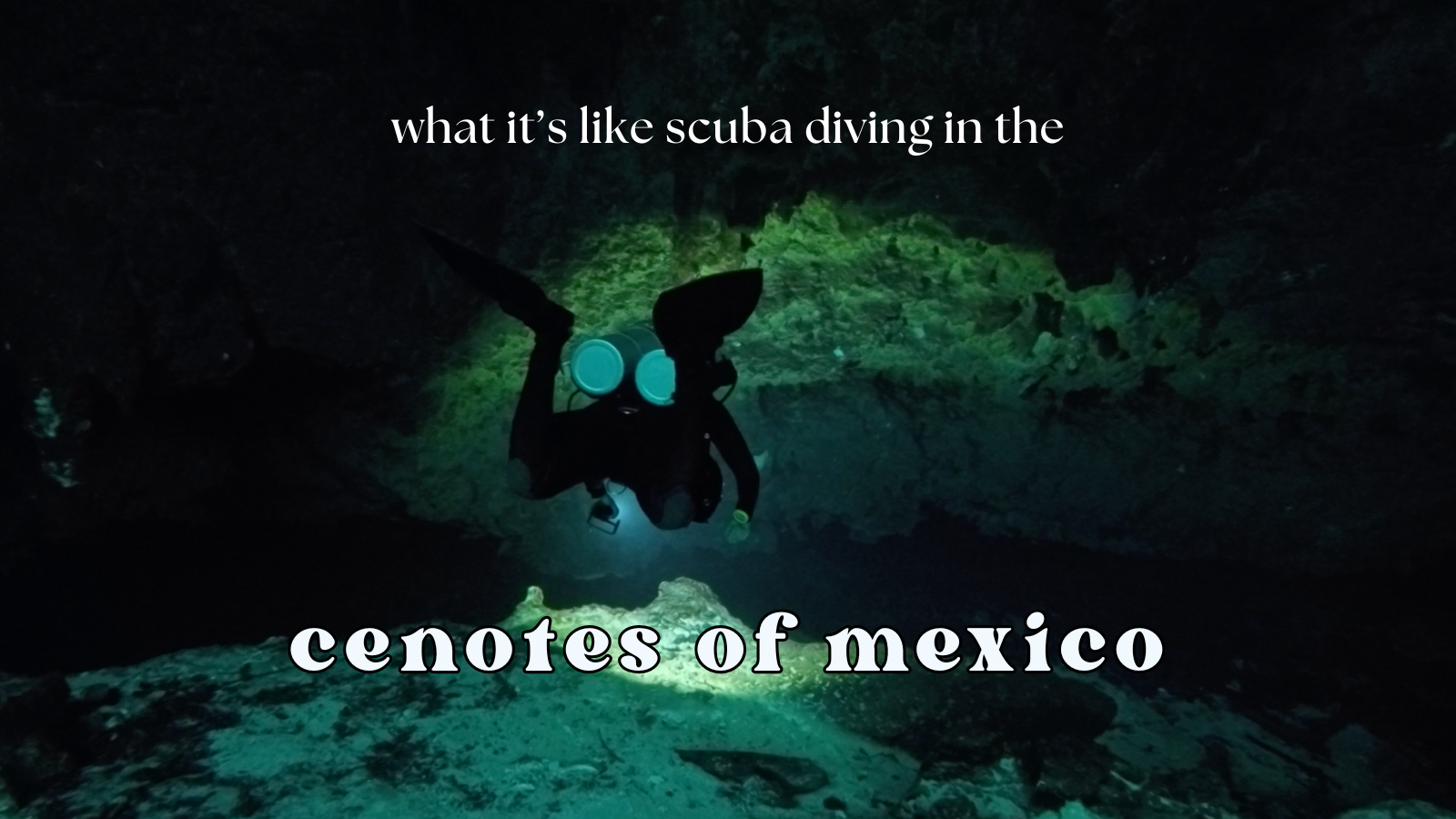
After diving some of Tulum’s most famous cenotes, I can confidently say cenote diving is one of the most surreal underwater experiences I’ve had anywhere in the world.
Over the years, I’ve dived in several places… Yet, few dives have felt as surreal as descending into the cenotes of Mexico. Instead of colourful fish and coral gardens, cenote diving takes you into a flooded cave system filled with crystal-clear freshwater, ancient limestone formations and these incredible shafts of sunlight. Visibility is incredible – the water is so clear that at times, it almost feels like you’re floating in thin air. There is usually no currents and simply otherworldly.
For many, cenotes become one of the most memorable diving experiences anywhere in the world. Although it’s not necessarily the same for everyone. I’ved dived in the cenotes of Tulum on two separate occasions… and every time, it’s completely different.
This guide explains what cenote diving is really like, who it’s suitable for and what to expect from some of Tulum’s best dive sites.
Disclaimer: Some links earn me a small commission – same price for you, slightly less tragic bank balance for me.
First off: What is a cenote?
Fun fact: cenotes are linked to the asteroid that wiped out the dinosaurs. That massive impact fractured the limestone bedrock across the Yucatan Peninsula. Over thousands of years, rainwater seeped into those cracks, slowly dissolving the limestone and carving out an underground world of rivers, caverns and chambers. Eventually, parts of the surface collapsed revealing the crystal freshwater pools we now know as cenotes.
In simple terms, a cenote is a natural freshwater sinkhole. But to the ancient Maya, they were far more than that. They were considered sacred portals to the underworld.
Cenote Diving at a glance
Location: Between Playa del Carmen and Tulum, Mexico
Water Type: Freshwater
Visibility: 30 + meters. Endless.
Certification Required: Open Water minimum
Best Cenotes for Beginners: Dos Ojos, Carwash
Best Cenotes for Advanced Divers: El Pit, Angelita
Water Temperature: 24 – 26°C (75 – 79°F)
Typical Dive Depth: 10 – 30m
What is Cenote Diving?
A cenote is a natural sinkhole formed when limestone collapses, exposing the groundwater beneath the surface. It’s usually freshwater. Think of the Yucatan Peninsula a little bit like Swiss cheese with all these holes scattered across the region. Some cenotes are connected to each other, some connect to an intricate cave system. The famous is the Dos Ojos system is linked to the massive Sac Actun cave network, forming part of the world’s largest known underwater cave system.
Cenote diving shouldn’t be confused with cave diving. Cave diving takes place deeper within the systems and involved technical dive gear and knowledge. For cenote diving, recreational divers remain within the cavern zone where natural light is always visible. This means you do not need cave certification to experience cenote diving, although you must dive with an full cave diving qualified guide.

Who can dive in the cenotes of Mexico?
In some ways, we can categorise the cenote dives into four. This is how I break it down for myself personally. There is a breakdown of the different level cenotes in Mexico which would correspond to my category list to some degree.
However, there is one cenote that you’re able to dive in as for Discover Scuba Dive – essentially a short course that allows you to experience what scuba diving is like. Think of it as a taster. They will keep you in the open water but you can at least have a little peek at what cenote diving is.
Category 1:
Let’s call these entry-level cenotes! To experience cenote diving, you will need to hold at least a PADI Open Water Certification or equivalent from another organisation. Personally, I would also add that you should be relatively confident in overhead environments, confined spaces and have good buoyancy! The stalactites are very fragile so you want to make sure you or your equipment doesn’t accidentally cause any damage. These aren’t a requirement but a recommendation to ensure you can relax and fully enjoy the experience!
Category 2:
I’d say these are your deeper cenotes like El Pit and Angelita – both extremely stunning dive sites, which I will go into detail below. These cenotes require a PADI Advanced Open Water Certification or equivalent from another organisation, as you’re going deeper than the recreational limit of a PADI OW diver.
Category 3:
The more technically challenging cenotes. These are your cenotes that have narrower passage ways, lower visibility but most important – have a very fragile environment. An example of this cenote would be Dreamgate – personally, my dream site to visit. You’ll need to have your PADI AOW certification and many (if not all) dive centers require previous cenote diving experience with them. They will evaluate your skills before allowing you to dive.
Category 4:
For me, at this stage, you’re getting into cave diving territory. So you would need a technical full cave diving license to explore deeper into the cenotes/cave systems.

Travelling with non-divers?
Not everyone in your group needs to be scuba certified to experience the cenotes. If you’re travelling with a partner, family member or friend who doesn’t dive, there are plenty of beautiful cenotes that can still be enjoyed from the surface! I’ve put together a separate guide to the best cenotes in Mexico for non-swimmers, including options where you can safely swim, snorkel or simply enjoy the scenery without scuba gear.
What makes Cenote Diving different to open water diving?
Getting to the dive site
Getting to the dive sites is a small adventure. You will take a pickup truck and head to the dive site. At the car park, you will start kitting up and doing your safety checks before walking to the entrance of the cenotes. It’s a little physical, especially wearing a 5mm wetsuit in the heat but the water is nice and cooling once you jump in.
Visibility
One of the first things you’ll notice is the visibility. Unlike the ocean, there is almost no suspended sediment in the water. The visibility is so good that distances become difficult to judge. Of course, provided someone doesn’t accidentally kick up silt. You feel like you or your buddies are floating in mid-air rather than underwater!
Points of interest
Another thing is the environment and what you see. There are no coral reefs or tropical fish during your dive. Actually, you’re diving to see geology! You’ll see stalactites (downward “growing” formations), stalagmites (upward “growing” formations) and enormous limestone chambers. It is truly a very different type of diving. Personally, I prefer diving for wrecks and rock formations so this is perfect for me.
Light
During your dives, you’ll see these beams of sunlight piercing through the water. It’s very dramatic and extremely beautiful. In some cenotes, particularly El Pit, these light rays are every bit as spectacular as the photos suggest.
Cenote dive sites
El Pit: a very dramatic cenote

Best For
-
- Advanced Open Water divers
- Underwater photographers
- Divers who enjoy dramatic scenery
- Experienced divers comfortable at depth
Dive Stats
-
- Depth: max 30 m
- Dive time: ±40 mins
If I had to choose one dive that best captures the magic of cenote diving, it would probably be El Pit. This cenote is part of the Sac Actun system, which is the largest underwater cave network in the world!
From the surface, it doesn’t look that impressive – a massive opening in the jungle floor… However, underwater is where the magic happens. Once you descend, you’ll see the sheer scale of El Pit. It’s almost a vertical drop into a massive chamber.
At ±15 m, you will pass through a halocline layer – this is where freshwater and saltwater meet. You’ll know when you pass this layer! Visually, the water appears distorted, you almost think that your eyes are messing with you. At ±25 – 30m, you’ll see the cloud-like layer of hydrogen sulphide formed from decomposing organic matter. It creates an illusion of an underwater river flowing. Another stellar feature of diving in El Pit is how the sunbeams penetrate the water. Depending on the time of day, it’s a striking beam of light that goes all the way to the bottom. I mean, just have a look at the photo I took during the dive with a GoPro – magical!
All in all, it’s probably one of my top 5 dive sites I’ve ever dove.
Diving Dos Ojos: a classic cenote experience

Best For
-
- First-time cenote divers
- Open Water divers
- Cavern enthusiasts
- Photographers
Dive Stats
-
- Depth: steady average 9 m
- Dive time: ±40 mins
If El Pit is the showstopper, Dos Ojos is the quintessential cenote dive. Diving in this cenote feels more like an exploration. The dive follows permanent guide lines through passages decorated with stalactites and stalagmites. Its name translates to “Two Eyes” referring to the two sinkholes connected by an extensive cavern system. Dos Ojos is actually also part of the same cave system (Sac Actun) as El Pit is. Here, there are two routes you can follow: Barbie Line and Bat Cave.
From memory, the Barbie line takes you through to explore the cavern system. Bat Cave is similar but at the end of the trail, you can ascend in a cave full of bats before returning to the start. For both routes, passages are wide, visibility is exceptional and the formations seem endless. It is remarkably accessible despite being unlike any open-water dive most divers have experienced.
It’s the most iconic and beginner-friendly cenote dives available to OW certified divers.
Angelita
Best For
-
- Advanced divers
- Interested in seeing a distinch halocline
- Underwater photographers
Dive Stats
-
- Depth: ± 30 m
- Dive time: ±40 mins
Angelita is a wild dive but in a good way. The main feature is the hydrogen sulphide layer that sits at ±25m and it is a lot more potent than El Pit. Emerging from the cloud is a dead tree which makes it feel very eerie. I can liken it to a flooded forest. During the dive, you descend below this cloud and visibility drops significantly. I remember barely being able to see a meter in front of me. It truly reminded me of Greek mythology and the underworld. It’s a very distinctive dive and visually very different compared to any of the others.
Carwash Cenote (Aktun Ha)

Best For
-
- New cenote divers
- Divers wanting a relaxed experience
Dive Stats
-
- Depth: ± 15 m
- Dive time: ±40 mins
Carwash Cenote (Aktun Ha) is very different from the other three dive sites above. It was called carwash because local taxi drivers would wash their cars with the fresh cenote water back in the day. From the surface, it looks more like a freshwater pond filled with aquatic vegetation. Once you descend underwater, you’ll come to find that there’s a cavern section to explore and a maze of dead tree trunks. It’s a bit more varied if you’re interested in seeing some aquatic plants rather than just limestone formations! It is a good recommendation as an introduction to cenote diving.
Cenote Manati (Casa Cenote)

Dive Stats
-
- Depth: average 10 m
- Dive time: ±40 mins
Cenote Manati, also known as Casa Cenote, feels similar to Carwash Cenote but is also really different. It is an open cenote bordered by mangroves. I would say it’s more of swim-throughs and less cavern/overhead environment. It’s a nice spot to see the freshwater of the cenote meeting the saltwater of the sea, as it’s located close to the coast. Here, you’ll actually see more marine life and occasionally, spot the resident crocodile! For divers transitioning from reef diving into cenotes, it’s one of the easiest and most approachable introductions to the region.
Cenotes Aren’t Just For Divers
One thing I love about the Yucatan Peninsula is that cenotes aren’t exclusively for scuba divers. If you’re travelling with someone who doesn’t dive, there are plenty of cenotes that can still be enjoyed by swimming, snorkelling or simply relaxing by the water. If that’s your situation, check out my guide to the best cenotes in Mexico for non-swimmers.
Is Cenote Diving worth it?
Absolutely! I’m biased… I truly think this is one of the best diving experiences you can do (if you’re not claustrophobic). I feel like this was a little love letter to cenote diving. Cenote diving can feel underwhelming if you’re expecting to see coral reefs and marine life. However, if you ever want to experience the closest thing to weightlessness in unusual underwater environments? Honestly, look no further. It’s an experience that feels genuinely unique. Floating through an ancient underground river system beneath the Mexican jungle is one of the few dive experiences that genuinely feels like exploring another world. It’s difficult to compare to anything else.
Even after diving around the world… El Pit and Dos Ojos remain among the most memorable dives I’ve ever done.

Other questions about Cenote Diving?
Is cenote diving safe?
Yes, if done properly. In terms of diving, there are different bail out points and you can start in a cenote that has less overhead environment to get yourself comfortable before going for the more complex dives.
Can Open Water divers dive cenotes?
Absolutely. There are a few cenotes where you only need your OW certification. Have a chat with the dive center you intend on diving with and they will match you with the right cenote.
How much does cenote diving cost in Tulum?
The prices have changed since I last dived in Tulum. As of June 2026, I’ve seen prices generally listed at about USD $250 for a two tank dive.
What is the best cenote for scuba diving?
ALL. But if you can only pick 2 cenotes – I recommend El Pit and Dos Ojos (Barbie Line).
Do cenotes have sharks?
No. Don’t worry, you won’t find sharks here as these are freshwater systems.



Leave a Reply